
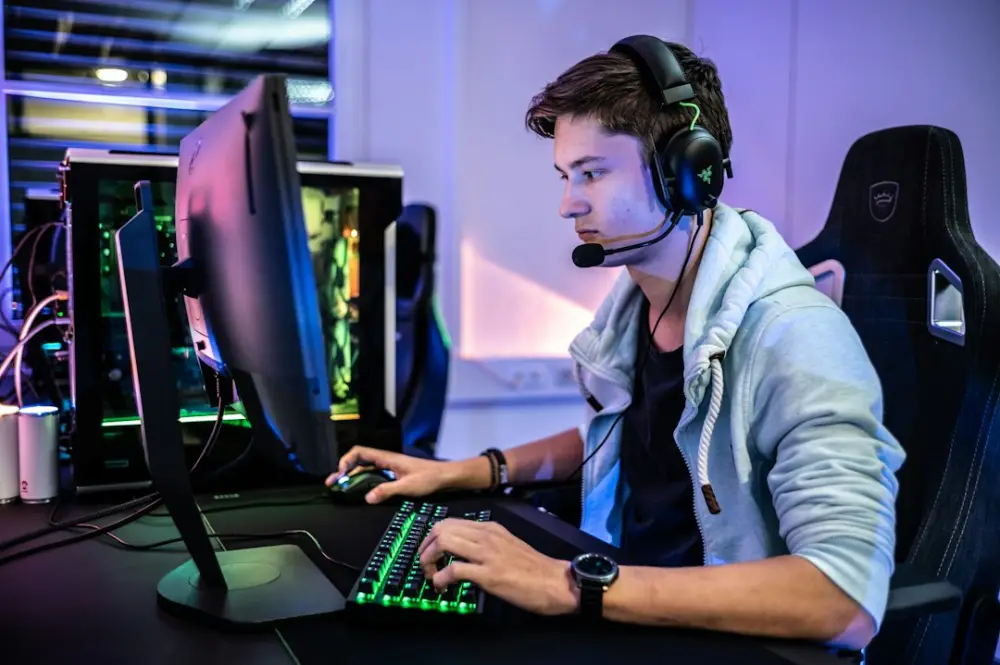
Esports team coordination is the process of synchronizing individual player actions, strategies, and communication to achieve collective goals during competitive play. In 2026, it involves managing real-time verbal callouts, role-specific responsibilities, and out-of-game practice schedules to ensure every team member operates as a unified unit rather than a group of disconnected individuals.
Success in high-level gaming relies on the ability to translate individual mechanical skill into a cohesive tactical output. When five players act on different information, even the highest aim accuracy cannot compensate for a lack of structural unity. Coordination requires a shared mental model of the game state, where every player understands their teammates' positions and intentions without needing to ask.
Planning Your Team’s Strategic Foundation
Before entering a server, a team must define its identity and strategic approach. This foundation acts as a roadmap for decision-making during high-pressure moments. A common mistake is focusing solely on individual plays rather than establishing a "macro" strategy—the overarching plan that dictates how a team controls the map and manages resources.
For example, in a tactical shooter like VALORANT, a strategic foundation might involve a "default" setup. This is a pre-determined positioning where players gather information across the map before committing to an objective. By establishing these defaults, players know exactly where their teammates are looking, reducing the mental load required to cover blind spots. Without this foundation, coordination breaks down into reactive, frantic play that is easily exploited by disciplined opponents.
Recruiting Players and Assigning In-Game Roles
Building a coordinated team is not about finding the five best players; it is about finding the five players who fit together best. Roles should be assigned based on temperament and psychological profile as much as mechanical ability. A team full of aggressive "entry fraggers" will often struggle with the patience required for mid-game adjustments, while a team of passive players may fail to capitalize on openings.
Key roles typically include:
- In-Game Leader (IGL): The primary shot-caller who makes final decisions on rotations and executes.
- Support/Utility: Players focused on enabling the stars through flashes, heals, or area denial.
- Anchor/Lurker: Individuals who hold specific zones or gather information away from the main group.
- Entry/Playmaker: The first line of engagement who creates space for the rest of the team.
Assigning these roles early prevents the common issue of "overlapping intent," where two players attempt to do the same job, leaving another area of the game neglected. Clear roles allow for a more streamlined flow of information, as each player knows what they are responsible for reporting to the IGL.
Establishing Effective Communication Channels
Communication is the bridge that turns five individuals into a single unit. However, more communication is not always better. "Comms clutter"—unnecessary chatter, frustration, or vague callouts—can drown out vital information. Effective teams prioritize purity of information, using standardized terminology to describe map locations and enemy actions.
In 2026, elite teams use specific communication protocols to maintain focus. For instance, instead of saying "He's over there by the box," a coordinated player uses a specific map callout like "One HP, Triple Box, playing passive." This brevity allows the IGL to process the information and issue a command instantly. Developing this level of clarity is a core part of training for victory: how elite eSports athletes refine their cognitive processing speeds. Use tools like Discord for out-of-game planning, but rely on disciplined, short-form verbal bursts during the match.
First Steps for Enhancing Team Communication
To transition from a group of solo players to a coordinated unit, you must implement structured protocols. Use these steps to build a foundation for elite-level communication:
- Start by auditing your current map terminology to ensure every player uses the exact same names for every location on every map in your rotation.
- The first step in reducing "comms clutter" is to practice disciplined silence during clutch moments, allowing the active player to focus entirely on sound cues.
- To begin refining tactical flow, assign a secondary caller who specifically tracks enemy ultimate abilities or utility usage to support the IGL.
- Next, integrate a "ready check" system before executing a site take to confirm all necessary utility is available and teammates are in position.
- Finally, record your voice communications during a match and listen back during VOD reviews to identify moments where information was vague or delayed.
Managing Practice Schedules and Team Development
Coordination is a muscle that must be trained through repetitive, intentional practice. Simply playing ranked matches together is rarely enough to build professional-level synergy. A structured practice day should be divided into segments that target different aspects of coordination, from dry-running executes to reviewing recorded gameplay (VODs).
A typical professional practice loop often follows this order:
- Individual Warm-up: 30–60 minutes of mechanical drills or aim training.
- Strategy Briefing: Reviewing the specific goals for the day's scrimmages.
- Scrimmage Blocks: Playing against other organized teams to test strategies in a controlled environment.
- VOD Review: Analyzing the scrims to identify where coordination broke down.
- Recovery: Physical and mental downtime to prevent burnout and consolidate learning.
During VOD reviews, focus on the "why" behind a lost round. Did the support player miss their timing? Did the IGL lack the information needed to make a call? Identifying these gaps allows the team to adjust their protocols before the next session.
Scaling Performance for Tournament Competition
The transition from practice to tournament play introduces psychological stressors that can cause even the most coordinated teams to fracture. Under pressure, players often revert to individualistic habits, neglecting the communication and roles they practiced. Scaling performance requires building "stress-proof" coordination that remains intact when the stakes are high.
Data-driven analysis is essential for identifying these fractures. By understanding competitive gaming performance metrics, teams can see if their utility usage or trade-kill efficiency drops during official matches compared to practice. If the metrics show a decline, the team may need to focus on mental endurance and composure drills. This might include simulated high-pressure scenarios or "clutch" drills where one player must navigate a disadvantageous situation while the rest of the team provides only essential, calm information.
Mastering Team Synergy with Ellevens Esports
Achieving durable peak performance requires a balance between rigorous tactical training and physiological recovery. At Ellevens Esports, we look at team coordination through the lens of cognitive science and physical readiness. A player who is fatigued or mentally drained cannot process rapid-fire callouts or maintain the situational awareness necessary for high-level synergy. Coordination is not just a tactical choice; it is a byproduct of a healthy, well-rested, and disciplined roster.
By focusing on the science of reaction time and the mechanics of clear communication, teams can move beyond simple gameplay and into the realm of elite performance. True synergy happens when the physical preparation of the individual meets the strategic discipline of the group. As you refine your team’s internal systems, remember that the goal is to create a resilient environment where every player is supported by the collective strength of the unit. For more insights on the technical and physical aspects of gaming, explore our guides on recovery and performance optimization.